Is There a Samurai Castle in Osaka? The History You Can Still See
Yes: Hideyoshi built Osaka Castle in 1583; it fell in 1615. The tower is a 1931 rebuild; his scorched walls are in the Stone Wall Museum, ¥1,200 with it.
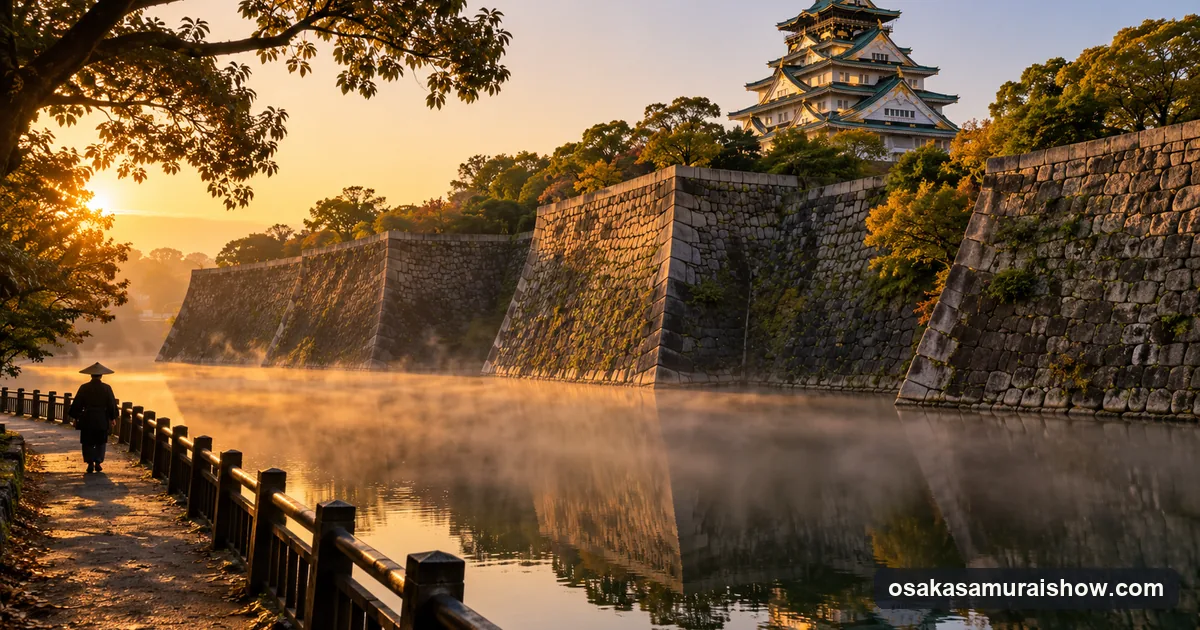
Yes. Osaka Castle is the samurai castle, and its story is one of the biggest in Japanese history: Toyotomi Hideyoshi built it from 1583, and its fall in the summer of 1615 ended his family’s line. What you need to know before you go is that the tower you will photograph is a 1931 rebuild. The samurai-era castle survives in pieces, and the best piece is underground.
This page is the short version of what happened and where you can still see it.
Is there a samurai castle in Osaka?
There is, on the site of the Ishiyama Honganji temple. Hideyoshi started building in 1583, and the main tower was finished about two years later. In Japanese the castle is Osaka-jo, and the tower is the Tenshukaku.
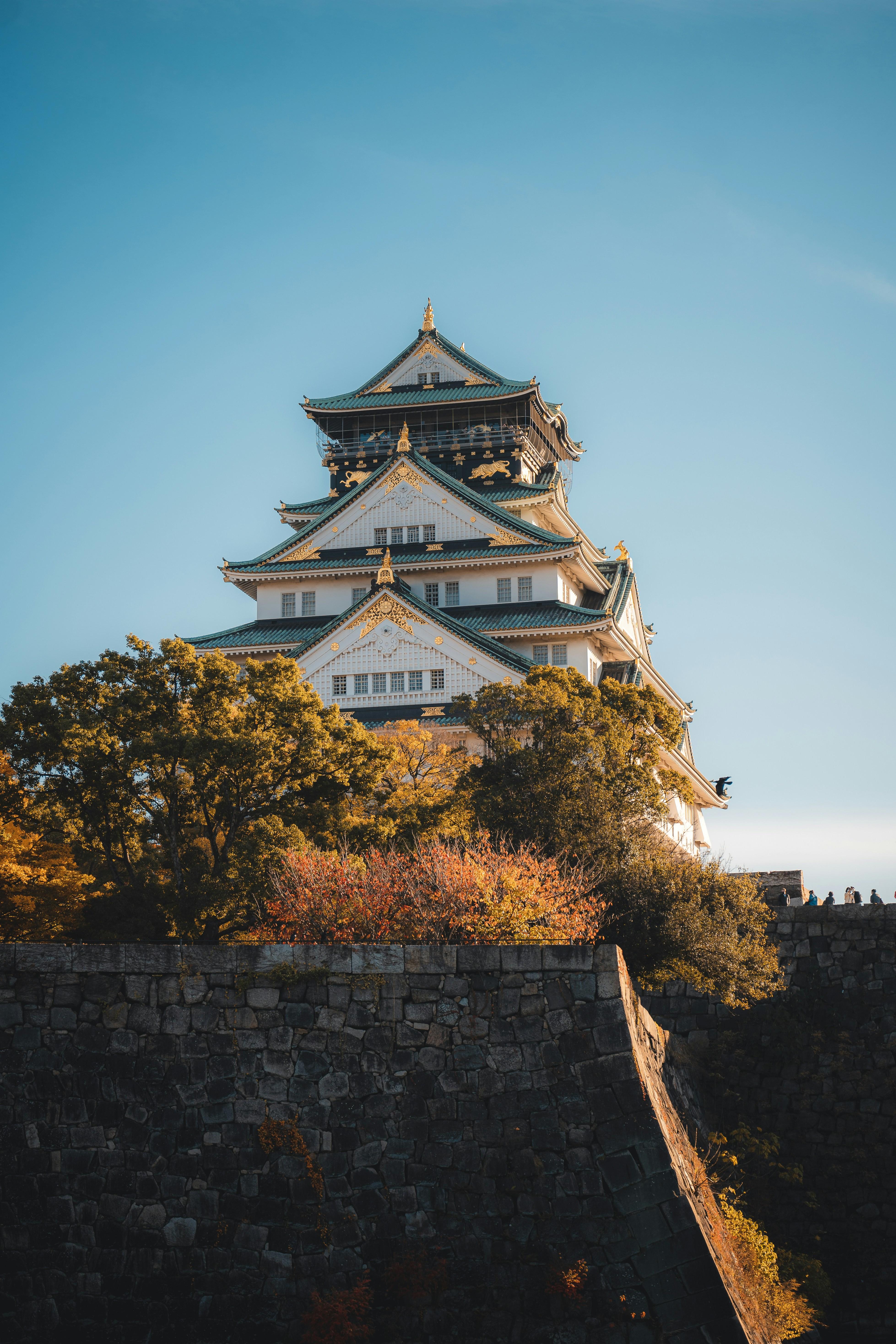
The castle has had three towers. Hideyoshi’s burned in 1615. The Tokugawa rebuilt it, and that one burned too. The tower standing today was rebuilt in 1931 with donations from Osaka’s citizens, and it has been a museum from the start. It became a registered tangible cultural property in 1997 and an Osaka City designated cultural property in 2025.
One thing surprises most visitors. The great stone walls and moats you walk past date from the Tokugawa rebuild or later, not from Hideyoshi. The Tokugawa built their castle over his.
The siege of 1614 and 1615
By 1614 the castle was the seat of Hideyori and Yodo-dono, the last of the Toyotomi household. The Tokugawa came for it twice.
The Winter Campaign began on 19 November 1614, by the lunar calendar. The best-known fighting came early in December at the Sanada-maru, an earthwork fort defended by Sanada Yukimura. Sources disagree on the exact day of that battle, so we leave it at early December.
The Summer Campaign followed in 1615. The castle fell, the tower burned, and the Toyotomi line ended with it.
Sanada Yukimura, and the shrines that keep his story
Sanada Yukimura, also known as Nobushige, is the defender the city’s tourism office has built a whole walking route around: red armour and a crest of six coins. Several places in the south of the city keep his story, and much of it is tradition rather than proven fact.
- Sanko Shrine, in Tennoji-ku, is said to be the site of the Sanada-maru. It has a statue of Yukimura and a tunnel he is said to have dug as an escape route.
- Yasui Shrine is where, by tradition, the wounded Yukimura withdrew in 1615 and died.
- Enjuan, also called Kama Hachiman, has the sacred tree Yukimura is said to have struck with a sickle to pray for victory. The grounds are open 08:00 to 17:00 and photography is not allowed.
The city’s tourism office publishes a Yukimura walk that links these stops: Tennoji Station, Chausuyama, Isshinji, Yasui Shrine, Zofukuji, Enjuan, Shinganji, Sanko Shrine, Tamatsukuri Inari and finally the castle. It is a way to walk from the fort he defended to the castle whose fall ended the war.
Two shrines that come up in some lists, Kozu Shrine and Sumiyoshi Taisha, are not on it: we found no samurai connection for either.
What is inside the castle museum
The tower’s collection covers Hideyoshi, the Sengoku period and the castle, and the displays rotate. The museum owns the “Osaka Summer Campaign” folding screen, an Important Cultural Property that pictures the 1615 battle. We could not confirm whether the original is out on any given day.
Third-party guides describe a miniature diorama of the summer siege, modelled on that screen, with Yukimura in red; dioramas of Hideyoshi’s life on an upper floor; and an observation deck at the top. The castle’s own floor guide was not something we could read, so take that layout as likely rather than certain.
The Toyotomi Stone Wall Museum
This is the part that is actually Hideyoshi’s. Opened on 1 April 2025, it is built over the buried stone wall of the Tsume-no-maru, the innermost compound where Hideyoshi and his wife Nene lived, and later Yodo-dono and Hideyori. You can see scorch marks from the 1615 fire on the stones, and foundation stones taken from temples and reused in the wall. It shares the tower’s hours, needs a tower ticket, has no shop, and may close without notice for wall safety checks.
Ticket and hours
| Osaka Castle main tower + Stone Wall Museum | |
|---|---|
| Adult | ¥1,200 (since 1 April 2025) |
| High school and university | ¥600 with ID |
| Junior high and under | Free, with proof of age |
| Hours | 09:00 to 18:00, last entry 17:30 |
| Closed | 28 December to 1 January |
Official figures, checked 3 October 2026.
The castle takes no entry reservations; it sells web tickets as well as tickets at the gate. The park is free to walk. The Osaka Amazing Pass, ¥3,500 for one day or ¥5,000 for two on sale until 31 March 2027, includes the tower and the Stone Wall Museum. If you want more than this page holds, osakacastlemuseum.org covers the castle’s tickets and floors in detail.
What is the best time of day to visit Osaka Castle?
We do not have crowd data, so we will not name a best hour. What the facts support: the doors open at 09:00 and the last entry is 17:30, and the Stone Wall Museum keeps the same hours, so leave time for both. If you want an evening samurai show after the castle, the harbour show at Tempozan starts at 17:00 on its show days, which makes a morning castle visit the easier pairing.
Seeing it with a guide
The castle grounds are big, and the history is mostly in the places that no longer look historic. A guided walk fills that gap. The Osaka Castle and Samurai History Tour by TripGuru Japan is three hours, from $20, rated 4.7 over 118 reviews. For a first visit, when you want the siege and the Toyotomi story explained on the ground, it is the simplest way to get it.
Entry to the tower is not something we sell, so check what the tour includes before you also buy a ticket at the gate.
Other historical sites in Osaka
For samurai history specifically, the list is short: the castle, the Stone Wall Museum, and the Sanada shrines above. If you want to wear the armour rather than read about it, an armour session near the castle is covered in the Osaka samurai museum guide, along with the armour studio near Dotonbori that calls itself a museum. For an evening after the castle, is the Osaka samurai show worth it compares the three samurai shows, and Osaka or Tokyo explains why the castle is Osaka’s strongest card. The homepage has everything bookable.
History from osakacastle.net and osaka-info.jp; siege dates from published histories that disagree on the Sanada-maru day; shrine traditions from the Osaka tourism office’s Yukimura course. Checked October 2026.
Book the Castle and Samurai History Tour
Three hours on the castle grounds with a guide who tells the Hideyoshi, siege and rebuild story stone by stone, with the entry ticket as an option. From $20, rated 4.7 by 118 guests, free cancellation up to 24 hours before.
Check Availability & Book